Modern Technologies Complement Design Ideas

- Summary
- Mobility Details
- Inclusion
- Innovation Element
- Impact
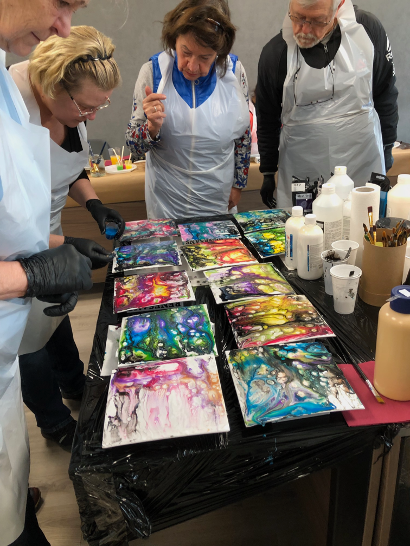
The TRAIL pilot mobility in Kaunas, Lithuania (07–12 April 2025) enabled ten Polish older learners (aged 65+) and two educators to engage in a KA1 group mobility focused on “Modern technologies complement design ideas.” Set against a backdrop of limited prior mobility experiences—often hindered by language, health, or digital confidence—the initiative aimed to foster active ageing, social inclusion, and European belonging through immersive international learning. Participants took part in joint educational sessions, feedback rounds, creative workshops, social dinners, and intercultural exchanges, with activities intentionally structured to enhance intergenerational dialogue and mutual recognition. The program introduced basic modern ICT tools—including artificial intelligence, gaming, and VR—while integrating hands-on creative workshops in graphic techniques and jewelry design, such as casting with acrylic paints. The older adults worked collaboratively on a shared sustainability challenge, developing their own team solution and presenting their findings to the group. Through ongoing interaction and respectful feedback, participants were encouraged to share insights and learn from peers and teachers, highlighting the value of seniors’ perspectives. The experience demonstrates that, with targeted support measures, older adults can successfully participate in European mobility projects, strengthening their connection to civic life, reinforcing their European identity, and affirming their role as active, lifelong learners.
Target Group: Seniors (aged 65 to 85)
Sending Country: Poland
Hosting Country: Lithuania
Mobility Duration: 6 days
Challenge to Inclusion
- The project faced key barriers in including older adults who often have limited prior international mobility experience due to language limitations, health issues, aging-related cognitive and physical changes, and low digital confidence.
- Participants showed limited English proficiency, unfamiliarity with intercultural and international team learning, diverse levels of ICT skills, and travel-related anxiety.
- The need was to design a mobility experience that overcame these limitations to enable active, meaningful engagement and social participation in a supportive environment.
Solutions for Inclusion and Support:
- The project implemented tailored support such as bilingual communication and visual aids, one-on-one digital skills assistance, and flexible pacing with regular breaks.
- Physical accessibility was ensured by selecting appropriate venues and accommodations.
- Social integration was promoted via planned intercultural activities like group meals, cultural visits, and team discussions.
- Preparatory sessions were offered before mobility to assess needs, explain the program, and build skills, alongside ongoing mentoring during the activities.
- Structured reflection and feedback rounds helped participants articulate progress and set personal goals.
- The innovative approach combined modern ICT tools (AI, VR, gaming) with creative workshops in art and jewelry design specifically adapted for older learners.
- Inclusive curriculum design balanced theoretical input with hands-on, practical activities supporting digital literacy and intercultural dialogue.
- The project employed sustainability principles (e.g., green travel via train/bus) and integrated older adults’ own sustainability challenges into their learning.
- Facilitation methods focused on fostering mutual respect, intergenerational dialogue, and empowering seniors as contributors rather than passive learners.
- Enhanced digital literacy and confidence among older adults, enabling improved communication, navigation, and information access.
- Strengthened European identity and social participation through intercultural exchange and group collaboration.
- Increased awareness of sustainability and active ageing.
- Empowerment of seniors as lifelong learners capable of engaging in international mobility projects despite prior barriers.
- Positive participant feedback evidenced satisfaction, motivation for ongoing learning, and a reinforced sense of civic contribution.