Meeting Sand Sports, Inclusion and Sustainability



- Summary
- Mobility Details
- Inclusion
- Innovation Element
- Impact
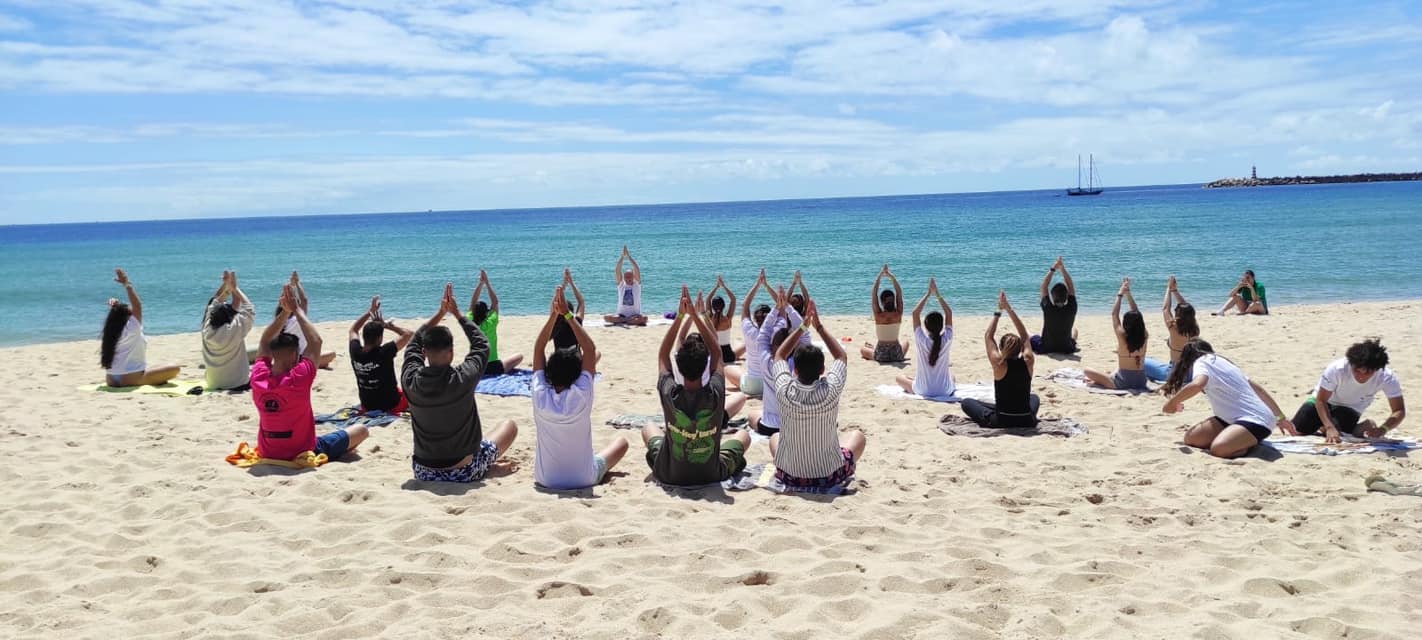
This TRAIL pilot was designed to promote social inclusion among young adults, inclusion and sustainability using informal activities related to sand and beach sports. From 26 to 29 of May 2025 in Peniche, Portugal, entitled “Meeting Sand Sports, Inclusion and Sustainability”. The course used a Design-Based Collaborative Learning (DBCL) approach and brought together students from Portugal and Poland and Finland.
The course started with an inspirational day prepared by students and professors from Leiria Polytechnics followed by a design thinking inspired method framed around the UN Sustainable Development Goals (SDGs) and the question: “How can sand sports be more inclusive and contribute to a greater sustainability awareness?”.
The pilot was designed as an inclusive learning experience under the TRAIL project to improve social integration of young adults with health limitations or reduced income but willing to meaningfully engage in international learning experiences. The results demonstrate that sand sports and informal learning can be a great environment to help in inclusion projects, reinforcing the sense of social connection and team work.
Target Group: Young adult learners, aged 18 to 24.
Hosting Country: Portugal
Mobility Duration: 4 days
Challenge to Inclusion:
- Learner background and limitations: Participants were young adults (18–24) with some physical or cognitive limitations, low confidence, and limited international or multicultural experience.
- Social and emotional barriers: Some learners had low social skills and struggled to communicate confidently in a diverse, international environment.
- Accessibility and adaptability issues: Ensuring that all activities (especially outdoor and sport-based) were physically accessible and non-intimidating was a key challenge.
- Mental and physical stamina: Managing energy levels, anxiety, and ensuring participants’ emotional comfort in unfamiliar contexts required careful pacing.
- Limited experience with design-based learning: Many had not previously used creative or collaborative frameworks like Design-Based Collaborative Learning (DBCL) or design thinking, requiring extra facilitation and simplified instructions.
Solution to Inclusion
Need for flexibility, breaks, and informal structure → Balanced daily program; learners could choose their pace and take breaks freely.
Feeling welcomed and included → Shared meals, informal beach settings, and peer feedback to build group cohesion.
Comfort and low navigation stress → Activities hosted in accessible locations; facilitators ensured comfort and orientation on-site.
Managing energy and mental comfort → Gentle pacing, optional reflection sessions, and reduced-pressure environment.
Confidence and reassurance → Daily check-ins, constant mentor presence, and group reflections for emotional safety.
Integration of Design-Based Collaborative Learning (DBCL):
A creative, problem-solving framework that encouraged participants to co-design solutions related to inclusion and sustainability — a novel approach for learners with fewer opportunities.
Linking inclusion with sustainability:
The program uniquely framed social inclusion through environmental awareness, using sand sports and the ocean as inclusive learning environments.
Adapted sport experiences:
The adapted surf activity demonstrated how physical activities can be reimagined to include people with disabilities, combining recreation, empowerment, and teamwork.
Informal and experiential learning environment:
Learning took place in open, non-formal settings (the beach, outdoor spaces), reducing anxiety and creating a sense of equality and connection.
Use of LEVEL5 Validation:
Learners assessed their personal progress in a competence-based model, connecting self-reflection with EU-level validation of learning outcomes.
Observed impact:
- Learners developed confidence, intercultural communication, and teamwork skills.
- Participants became more aware of inclusion and sustainability, seeing how both concepts interlink in practice.
- Many overcame initial hesitation and felt empowered to participate actively and creatively in discussions.
- The project successfully fostered a sense of belonging, equality, and mutual respect across national and personal differences.
Foreseeable long-term impact:
- Enhanced social inclusion and employability through improved confidence, collaboration, and communication skills.
- Promotion of sustainability education through inclusive, sport-based learning models.
- Development of a replicable framework for inclusive mobility using design thinking and experiential outdoor learning.
- Strengthened cooperation between partner institutions (Portugal, Poland, Finland), contributing to a European network for inclusive and sustainable education.