
Disability vs. Disadvantage : Concept and Definition
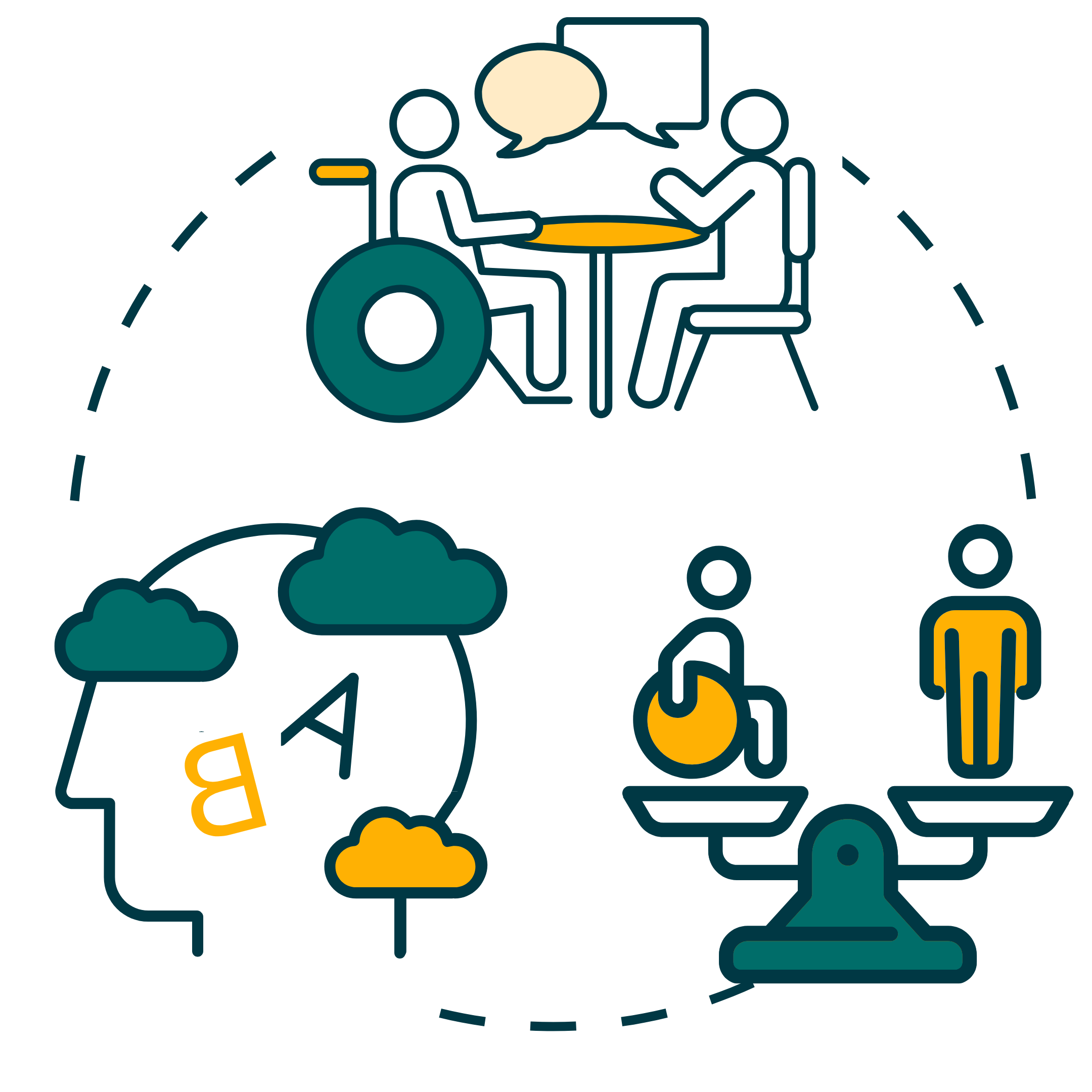
Terminology related to disability and disadvantage is often confused. In this framework,the main objective of this module is to present the definitions of ‘disability’ and ‘disadvantage’ in the context of promoting inclusive mobility and lifelong learning, especially in adulthood.
As well as addressing definitions, the module will look generally at the different types of disability and more specifically at their implications for lifelong learning, with an emphasis on Specific Educational Needs. By understanding the definitions, concepts and types of disability, it will be possible to sensitise learners, mentors, facilitators, trainees and society in general to this issue, regardless of each individual’s abilities, background or experiences.
- Onboarding
- Bringing with You
- Travellers Tips
- Activities
- Resources
Addressing both disability and disadvantage requires more than just accommodations; it involves understanding how various social, economic, and physical barriers intersect and affect people. In this way this module aims to equip facilitators/trainers who will work in different institutions or with individuals in a particular way, as communication mediators, taking into account different types of audiences. To enable facilitators and trainers to understand and act inclusively in the face of human diversity especially in relation to people with disabilities.
Key learning objectives:
- Distinguish between the concepts of Disability and Disadvantage;
- Master the concepts and types of disability;
- Acquire knowledge of the different profiles of people with specific needs;
- Recognise the particularities of different contexts
What is Disability?
Disability is a physical, mental, intellectual, or sensory impairment that affects an individual’s ability to perform everyday activities. Disabilities can be congenital (present from birth) or acquired due to illness, injury, or aging. They may be permanent or temporary, and their impact varies depending on the individual and their environment.
Disabilities are often classified into different categories, including:
- Physical disabilities (e.g., mobility impairments, paralysis)
- Sensory disabilities (e.g., blindness, deafness)
- Intellectual and cognitive disabilities (e.g., Down syndrome, learning disorders)
- Psychological disabilities (e.g., anxiety disorders, schizophrenia)
What is Disadvantage?
Disadvantage is a situation or condition that makes it harder for a person to succeed or participate fully in society. Disadvantages can be caused by social, economic, environmental, or structural barriers and are not limited to people with disabilities.
Examples of disadvantages include:
- Economic disadvantage: Growing up in poverty with limited access to education or healthcare
- Social disadvantage: Experiencing discrimination based on gender, race, or class
- Geographical disadvantage: Living in a remote area with limited job opportunities
- Health-related disadvantage: Chronic illnesses that limit work or study opportunities
Key Differences Between Disability and Disadvantage
Aspect | Disability | Disadvantage |
|---|---|---|
Definition | A physical, mental, or sensory impairment affecting daily activities. | A condition or circumstance that creates barriers to success or participation. |
Cause | Medical, genetic, environmental, or accidental factors. | Social, economic, environmental, or policy-related factors. |
Scope | Related to an individual’s abilities or health. | Can affect anyone, regardless of health or ability. |
Permanence | Often permanent but can be temporary in some cases. | Can change based on opportunities, support, or policies. |
Example | A person with a hearing impairment. | A student from a low-income family lacking access to technology. |
While disability and disadvantage are not the same, they can be connected. A person with a disability may face disadvantages if they encounter barriers such as inaccessible buildings, lack of assistive technology, or workplace discrimination. However, with proper accommodations and inclusive policies, a disability does not have to become a disadvantage.
For example:
- A student with dyslexia (disability) may be disadvantaged if their school does not provide learning accommodations.
- A person using a wheelchair may not be disadvantaged if their city has accessible transportation and buildings.
Disability refers to a condition affecting an individual’s physical or mental functioning, while disadvantage refers to social, economic, or environmental barriers that hinder success. Not all disabilities lead to disadvantages, and not all disadvantages are caused by disabilities. Reducing disadvantages requires inclusion, accessibility, and equal opportunities for all individuals, regardless of their abilities.
What we can do to prevent disability from becoming a disadvantage:
- Accessible buildings & public spaces
- Inclusive education and workplace policies
- Assistive technology & support services
- Anti-discrimination laws & awareness campaigns
- Sending organisation
- Hosting organisation
- The Traveller (learner)
Clarity around disability and disadvantage is essential for designing appropriate support structures. Misunderstandings often lead to either underestimating needs or overcompensating in ways that reduce autonomy. A precise understanding of each learner’s profile enables targeted planning rather than assumptions.
Traveller Tips
• Consider disability and disadvantage as different, though sometimes connected, concepts. Not all learners with disabilities are disadvantaged, and not all disadvantaged learners have disabilities.
• Gather information through gentle, structured conversations rather than relying on labels. A diagnosis alone does not describe functional needs.
• Be attentive to hidden disadvantages, such as poverty, digital exclusion, unstable housing, or lack of social support.
• Keep support proportional. Offer adaptations where needed, but avoid limiting learners by presuming incapacity.
• Be mindful of intersectionality. Learners may experience more than one barrier, affecting confidence, mobility readiness, or participation.
• Coordinate with specialist services when appropriate, including disability organisations, mental health professionals, or social support networks.
Potential applications
• Create a simple “Learner Profile” template that distinguishes disability, barriers, and required adaptations.
• Conduct a pre-mobility conversation focused on daily routines, learning styles, and comfort factors.
• Work with local disability associations to confirm specific accommodations.
• Avoid categorising learners solely by diagnosis; emphasise functional needs.
Understanding the distinction between disability and disadvantage helps hosting organisations respond appropriately and respectfully to learners’ needs. Effective hosting requires focusing on the actual barriers experienced, not assumptions based on visible or invisible characteristics.
Traveller Tips
• Prepare environments with both accessibility and flexibility in mind. Some learners require structural adaptations; others need social or emotional support.
• Avoid linking disadvantage to ability. A disadvantaged learner may not have a disability; a disabled learner may require minimal support.
• Offer clear, simple descriptions of the physical environment, learning activities, and daily routines to help identify potential barriers.
• Maintain openness to adaptations. Small adjustments—lighting, pacing, seating positions, quiet spaces—can make participation possible.
• Use inclusive, respectful language. Neutral descriptions of needs and barriers foster trust and psychological safety.
• Engage in ongoing dialogue with the sending partner to ensure that the hosting arrangements match real needs rather than assumptions.
Potential applications
• Provide a visual overview of the building layout, accessibility features, and programme schedule.
• Prepare flexible seating, quiet breakout rooms, or support tools (pictograms, large print, subtitles).
• Carry out a brief “arrival needs check” to ensure expectations align with the reality of the space.
• Establish a quick communication channel with the sending mentor for emerging needs.
Clear distinctions between disability and disadvantage help learners recognise their own strengths and support needs. Mobility becomes more manageable when barriers are named, understood, and addressed without judgement.
Traveller Tips
• Disability does not automatically imply disadvantage; disadvantage does not automatically imply disability. Each person’s situation is individual.
• Support is offered based on needs, not labels. Barriers such as stress, low confidence, or limited resources are valid and can be addressed.
• Sharing relevant information early allows trainers and hosts to plan respectfully and effectively.
• Strengths and experiences matter. They help shape adjustments and learning strategies.
• Barriers can change with context. A challenge at home may be less significant abroad, or vice versa.
Potential applications
• Note down personal needs related to communication, mobility, routine, or stress.
• Bring examples of strategies that work well in daily life.
• Participate in informal conversations about comfort levels, pacing, or accessibility preferences.
• Review photos, maps, or schedules to identify where adjustments might help.
Activities
More activities to come!
Take the Quiz!
Understanding Disadvantage and Disability
PDF Download here