Smartphone and Internet in Various Aspects of Life
- Summary
- Mobility Details
- Inclusion
- Innovation Element
- Impact
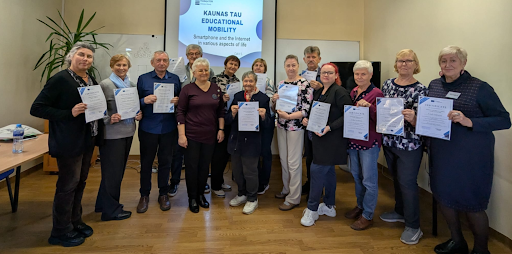
This TRAIL pilot mobility was designed to promote active ageing, social participation, and European belonging among older adults by engaging them in an international learning experience. From 07 to 13 of October 2024, fifteen older Lithuanian learners (aged 65+) participated in a KA1 Group mobility visit in Jelenia Gora, Poland.
The older participants participated fully in the joint elements of the programme: shared input sessions, feedback rounds, group discussions, social dinners, and cultural exchanges. These touchpoints were carefully designed to foster intergenerational dialogue and mutual recognition. For example, during team presentations, all participants received questions and comments from the teachers, encouraging respectful exchange and valuing the seniors’ insights and perspectives.
The course followed the full cycle of modern basic ICT technologies: long-term application of primary computer literacy, which is necessary in the modern world for all age groups, in everyday life: buying a bus ticket, a ticket to an event online, going to and reading information about historical places in a foreign country, asking local people using Google Translate, translating a restaurant menu, finding the shortest route to a desired object in a foreign country using maps programs, sharing images you like with colleagues, posting them on social networks, etc. Within this structure, the senior group explored their own sustainability challenge and developed a team response, culminating in a final presentation delivered to all participants.
This inclusive learning mobility experience examines how older adults with limited prior mobility experience — due to language barriers, health limitations, or digital confidence — can meaningfully engage in international, intercultural learning experiences. The results demonstrate that, with appropriate support, older learners can participate successfully in European mobility projects, reinforcing their sense of connection to European values, their civic contribution, and their role as lifelong learners.
Target Group: Seniors Learners (65+)
Sending Country: Lithuania
Hosting Country: Poland
Mobility Duration: 7 days
Challenge to Inclusion
Older adults (65+) involved face multiple barriers: limited English proficiency, age-related physical and cognitive limitations, low digital confidence, and lack of prior mobility or intercultural learning experience. These factors require careful pacing, clear communication, and practical relevance in learning content. Mobility challenges include travel anxiety and the need for accessible, comfortable transportation and lodging.
Solution to Inclusion
- Pre-mobility preparation with introductory sessions, needs assessment, and language/digital skills workshops.
- Bilingual communication with visual aids and peer support during activities.
- Flexible pacing and regular breaks, with tailored learning paths and extra one-on-one digital assistance as needed.
- Accessible venues and comfortable logistics arranged for health, mobility, and well-being needs.
- Social integration through structured group discussions, social dinners, and cultural visits.
- Continuous mentoring, monitoring progress, and encouraging open communication in a supportive environment.
- Use of practical tasks relevant to everyday life to connect learning with participants’ experiences.
- Combining digital literacy training (smartphones, apps, internet use) with cultural immersion and sustainability-themed activities.
- Use of modern, user-friendly ICT tools (Google Translate, Google Lens, WhatsApp) for real-life applications.
- Green travel approach emphasizing sustainability.
- A curriculum designed for inclusivity, emphasizing respect for older learners’ pace and capacities.
- Methodology fostering intergenerational and intercultural dialogue, mutual recognition, and empowerment in lifelong learning.
- Continuous reflection and self-assessment to strengthen motivation and track competence growth.
- Improved digital literacy and confidence enabling older adults to navigate technology and everyday tasks more independently.
- Enhanced intercultural understanding and social participation, reinforcing European identity and community belonging.
- Greater environmental awareness aligned with green travel choices and sustainability discussions.
- Increased motivation for lifelong learning and active engagement in civic and social life.
- Positive learner satisfaction and strengthened capacity of older adults to participate in international mobility despite initial barriers.